
Lessons from Therapy: Intro
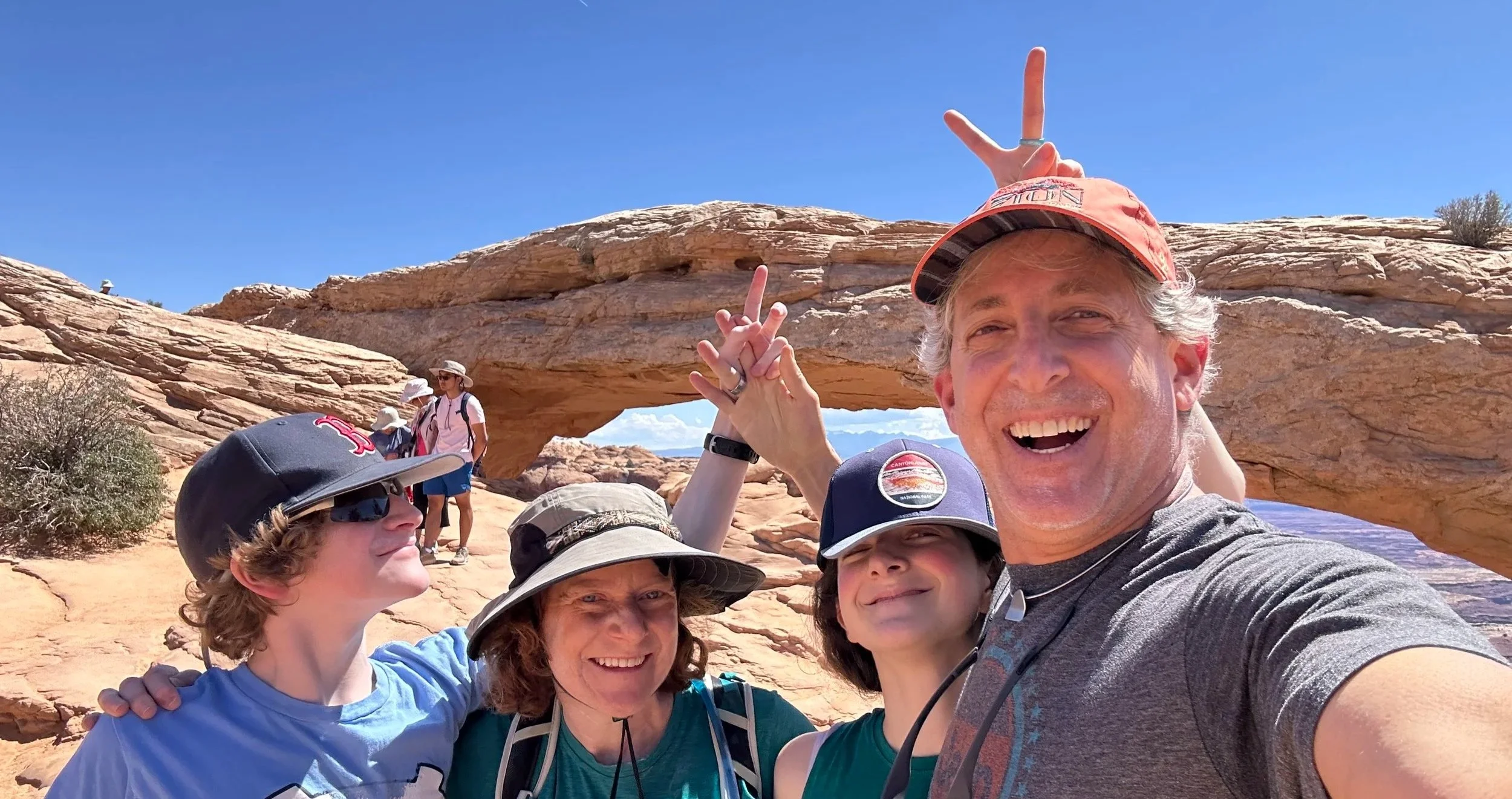
Making lemonade at Mesa Arch, Canyonlands National Park, Utah
I found out from a friend over the weekend that November is men’s mental health awareness month. Given the amount of mental health case management I’ve done for family members over the past 5+ years, I’m surprised I hadn’t heard about this before. Or maybe I had and just forgot…which is entirely possible. You may be wondering why this topic on a strategic consulting website. Read on and you’ll see…
Those who know me know how near and dear the mental health cause is. And not just in words. Case management of various family members’ mental and physical health journeys has been a significant part of my life for the past 5+ years, taking me across the country several dozen times, spending countless days and nights in hospitals, and recently prompting a relocation of sorts from our home in Durham to Asheville for the next 1-2 years. (Side note: Though some might call this part of my journey living life in the “sandwich generation,” I hate that term. It implies a state of victimhood that runs counter to my nature. But that’s a story for another time.)
Here’s the craziest part. Even though I don’t have a major DSM V diagnosis, I’ve learned more through this journey of supporting others than I ever could have imagined. Because along this path, I decided that if those nearest and dearest to me were being asked to work on being able to identify and regulate their emotions, overcome avoidances, recognize and address cognitive distortions (also known as thinking errors or, in our house, “coggie d’s”), improve their distress tolerance and executive functioning, practice perspective taking and relationship repair, increase neuroplasticity, exercise when they don’t feel like it, and more, the least I could do was join them on that journey and learn to do better myself.
I didn’t sign up for this. At times I’ve felt that I wasn’t capable of being stretched any further. Yet I kept going, because giving up on myself would have equated to giving up on my family. My journey as caretaker has challenged me to become a better father, husband, son and sibling. I’ve had to learn levels of compassion I didn’t know were within me, and I’ve had to practice self-care in ways I never imagined. Sometimes all I could do was try to figure out how to get through the next hour of my day. I’ve seen a therapist more in the past four years than the prior 49 years of my life combined.
And here’s how this connects to my professional life. The lessons I’ve learned along the way have made me a better friend, colleague, partner, advisor and coach. So stay tuned…I will be using this space to share some of these lessons and how they've helped me far beyond the contexts in which I learned them.
For now, I’ll leave you with this. If you find yourself struggling to navigate your journey, or if someone near and dear to you is struggling and you’re not sure how to help, I encourage you to reach out for help and support. Whether it’s from a therapist, coach, family member, friend and/or mentor. Regardless of whether you have a DSM V diagnosis. Because getting through life’s storms is a tall order that nobody should have to go through alone.