
Lessons from Therapy Part 1: The first thing is always the first thing…
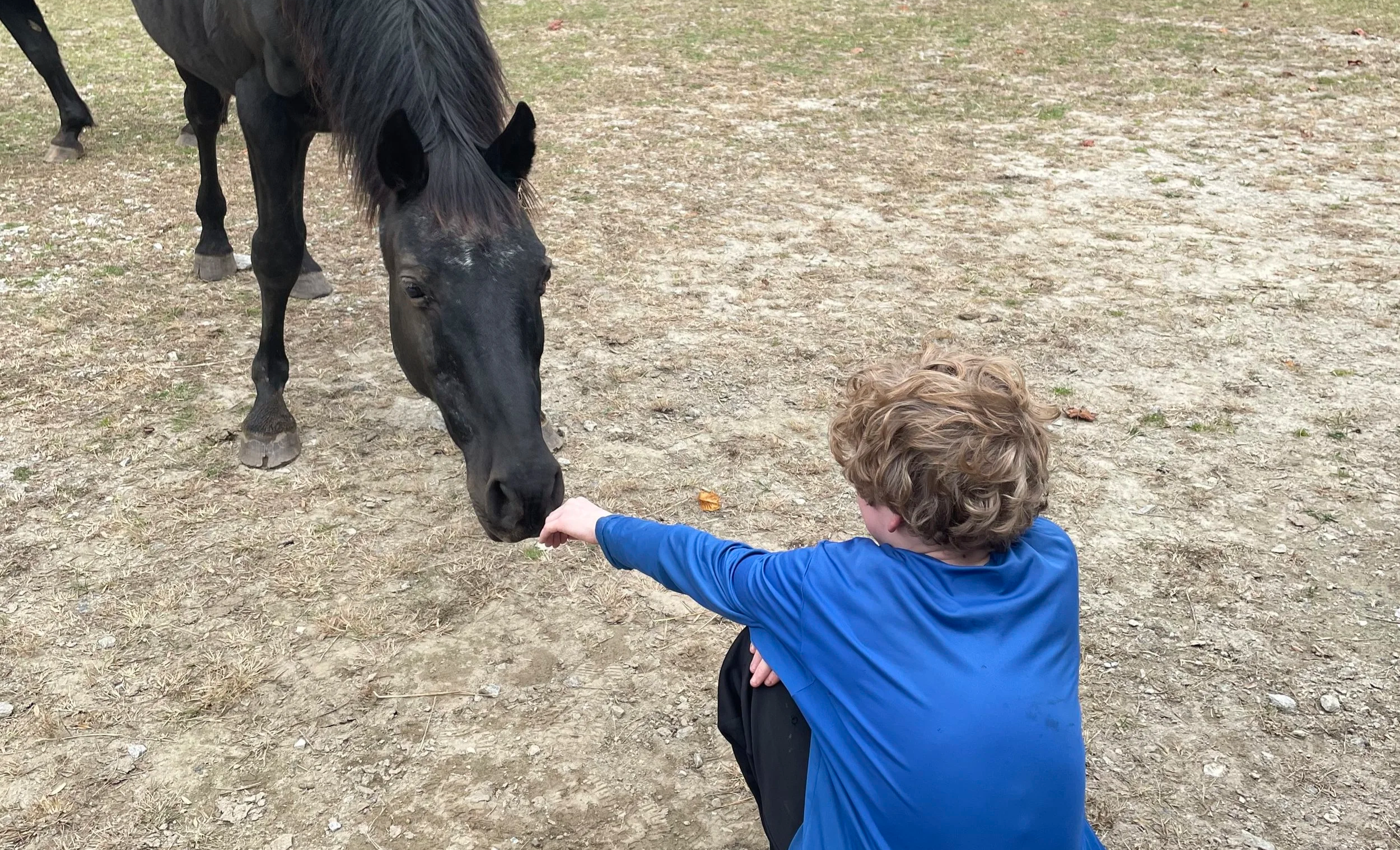
A few years ago, we were given a crash course in Parelli natural horsemanship. Not a literal crash course, fortunately. Just a figurative one. It came during a parent workshop at a program that one of our kids was attending. At the workshop, the head of equine therapy took us through natural horsemanship basics so that we could better understand some of the principles they were introducing to our kids. Little did I know at the time that it would create a foundation for a significant shift in the way I approach almost any situation.
The horses at this program were rescued and in the process of being rehabilitated. None were rideable at the time, and some were very reluctant to engage in any human interaction. The program used the rehabilitation of horses as a form of therapy for kids in the program. Natural horsemanship focuses on building trust in the relationship between person and horse while using principles similar to exposure therapy to help horses overcome anxiety about different environments or tasks. Among other things it requires patience, a commitment to building a relationship rather than engaging in a series of transactions, and an understanding of how horses learn. But before you even approach a horse, you have to do something else. Two something elses, actually.
The first something else is to check your own emotional state. How am I feeling? Am I nervous? Excited? Calm? Distracted? Horses, like humans, are very intuitive animals. They sense our energy. They can tell the difference between calm and anxious, patient and impatient, confident and apprehensive, attentive and distracted. And that’s not the only reason our own emotional state is important. Our own emotional state impacts our ability to process information and make decisions. When we humans are anxious, our limbic systems are more likely to be triggered, potentially sending us into a fight/flight/freeze/fawn response. We become more reactive and less likely to see and understand nuance.
The other something else is to assess the emotional state of the horse. A horse’s emotional state impacts how the horse is likely to respond to interactions with us, and it also impacts us. Being around an anxious, easily agitated horse is very different than being around a calm, relaxed horse. A horse’s emotional state can trigger us and impact how we interact with the horse. And awareness of emotional states doesn’t stop once the interaction begins. Emotional states can change, sometimes quickly, for the horse or the person. If that happens, it’s important to recognize the change as quickly as possible to adjust the approach.
I didn’t realize at the time how much these basic principles - observing my own emotional state and the emotional state of those around me - would impact me in professional settings, not just personal ones. I rarely make it a day, much lass a week, without speaking with a colleague, client, vendor or other business contact whose nervous system is activated for some reason or another. In the past, I would often find myself choosing an approach that doesn’t work well with someone in an elevated emotional state, getting triggered myself by their emotional state or, worse yet, entering the same elevated emotional state they were in. Starting with a basic awareness of their state and my own (and recognizing those are two different things) has allowed me to see other options for handling interactions with someone when one (or both) of us is triggered.
Here’s a recent example. We had been working with one of our startup clients for a couple of months on messaging and a go-to-market strategy for a new product line the client was preparing to launch in a market where sales cycles are long. The client was also in the middle of a fundraising round. On one of our weekly calls, our client came to the call wanting to find out what we could do to speed up the process of getting traction with prospective clients because prospective investors were looking for more traction before they were ready to invest. I could immediately sense our client’s frustration, and understandably so. Fundraising is a tough grind.
Before I responded, I checked my own emotional state to see if I was triggered. It would have been easy to feel a bit defensive because we had already opened some doors with some high-value prospective clients in a very short period of time leveraging connections and relationships we already had, and we spent a couple of weeks updating the investor pitch deck to incorporate messaging around the new product line. We had been doing (I thought) just about all we could do given where the client was in the process. Fortunately, I wasn’t feeling defensive and recognized that I would be able to stay calm.
Knowing that the client’s stress level was high and I was confident that I could remain calm, I chose an approach that I thought could help us get to a better place. I started with questions of curiosity. Can you give us an example of one of the recent conversations with a prospective investor? Were they looking for any type of traction in particular? How did you respond when they asked about traction? As the client began sharing examples and frustrations, I could sense the client starting to regulate. I also recognized a couple of opportunities. The first was to help the client understand that discussing the compelling prospective use cases for the new product line was not an answer to questions about traction. It was an answer to another question, addressable market, that investors were comfortable with. I also sensed the client would benefit from having prepared talking points about the traction they had gained, including upcoming product demonstrations with prospective clients and NDAs with other prospective clients with specific projects in mind. The client loved the idea. We also added a slide to the investor deck to specifically address traction. Armed with better ways to talk about traction, the client started seeing an immediate difference in the conversations with prospective investors, several of whom signed term sheets to invest.
As I’ve put this into practice, I’ve been reminded of how quickly many emotions can subside if simply given time and space, and how much of a difference that can make in building relationships and achieving shared objectives. So if assessing your own emotional state and the emotional states of those around you isn’t part of your regular toolkit, give it a try. If it has anywhere near the impact for you that it has for me, I think you’ll be glad you did.